News Afrika
News Afrika
HomePoliticsEconomyMediaBusinessTechnologyHealth

Privacy PolicyTerms of ServiceAbout UsContact UsEditorial PolicyCorrections PolicyOwnership & FundingOur TeamCookie PolicySitemap

© 2026 News Afrika • Independent African Journalism • All Rights Reserved

    HomePoliticsLamola at UN: No Place for Nukes as SA Chairs Ban Review
    Politics

    Lamola at UN: No Place for Nukes as SA Chairs Ban Review

    South Africa takes the helm of the Nuclear Weapons Ban Treaty review, positioning itself at the center of a renewed global push against atomic arms.

    By:Elize Smit
    February 25, 2026
    3 min read
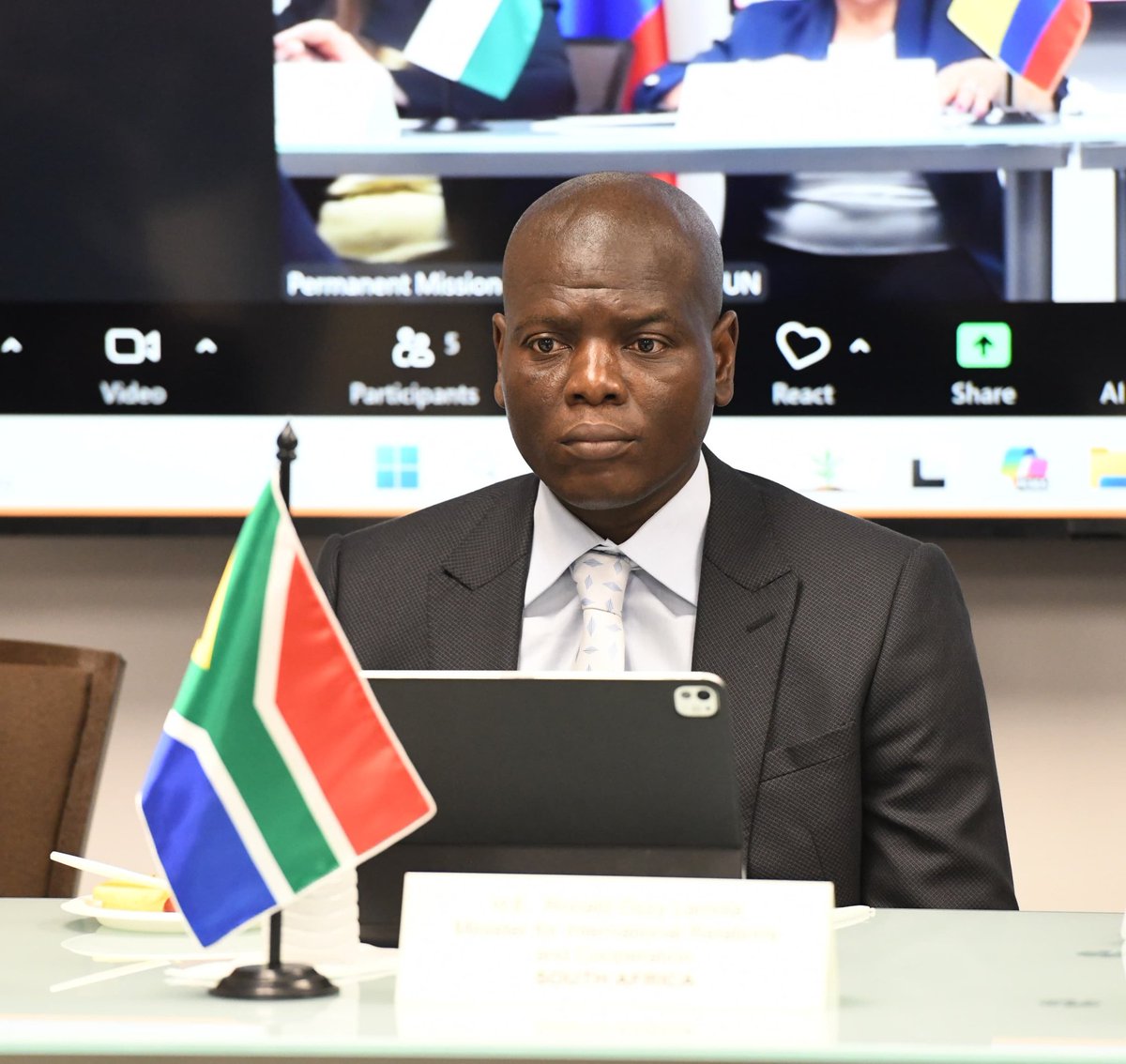
    Ronald Lamola seated at desk with South African flag and nameplate during UN engagement.
    Minister Ronald Lamola addresses global partners as South Africa prepares to chair the Nuclear Weapons Ban Treaty review. | Photo: Photo supplied
    • •South Africa will chair the upcoming review of the Treaty on the Prohibition of Nuclear Weapons.
    • •Minister Ronald Lamola told the UN there is "no place for nuclear weapons in the 21st century."
    • •Pretoria’s leadership revives its long-standing anti-nuclear legacy and signals a stronger Global South voice in disarmament debates.

    South Africa has stepped into a defining diplomatic moment. Speaking at the United Nations Disarmament Conference, Minister of International Relations and Cooperation Ronald Lamola declared that nuclear weapons have "no place in the 21st century," as Pretoria prepares to chair the upcoming review of the Treaty on the Prohibition of Nuclear Weapons (TPNW).

    Addressing delegates at the United Nations, Lamola framed South Africa’s upcoming role not as ceremonial, but as consequential. In a world unsettled by geopolitical rivalry, renewed arms spending and open conflict, he argued that the continued existence of nuclear weapons represents a failure of global political imagination.

    "There is no place for nuclear weapons in the 21st century," Lamola said, calling on states to recommit to multilateral solutions and international law.

    A Country With Moral Authority on Disarmament

    South Africa occupies a rare position in nuclear history. It remains the only country to have voluntarily dismantled its nuclear weapons programme and joined the global non-proliferation regime as a non-nuclear-weapon state. That decision in the early 1990s reshaped its diplomatic identity and continues to underpin its credibility in disarmament forums.

    By chairing the TPNW review conference, Pretoria is expected to steer discussions on compliance, verification, victim assistance and universalisation of the treaty. The role places it at the intersection of competing worldviews: nuclear-armed states that resist the treaty and non-nuclear nations that see it as a moral and legal imperative.

    Why the Treaty Matters Now

    The Treaty on the Prohibition of Nuclear Weapons, which entered into force in 2021, outlaws the development, testing, possession and threat of use of nuclear arms among its signatories. However, its influence remains constrained by the absence of nuclear-armed states among its members.

    Lamola’s remarks come at a time when nuclear rhetoric has resurfaced in global conflicts and strategic alliances are hardening. For many Global South nations, frustration is growing as progress under older disarmament frameworks stalls while modernization of nuclear arsenals continues.

    Leadership Beyond Symbolism

    South Africa’s chairmanship will test whether moral clarity can translate into diplomatic momentum. The review conference is expected to focus on practical pathways — from encouraging broader ratification to strengthening humanitarian arguments around the catastrophic consequences of nuclear use.

    • Expanding treaty membership among non-signatory states
    • Reinforcing international norms against nuclear threats
    • Centering humanitarian and environmental consequences
    • Encouraging dialogue between nuclear and non-nuclear states

    For Pretoria, the moment carries strategic weight. It reinforces South Africa’s longstanding commitment to multilateralism while elevating its profile as a bridge-builder between developed and developing nations.

    Whether the upcoming review conference produces measurable breakthroughs remains uncertain. Yet Lamola’s message was unmistakable: disarmament is not a relic of Cold War diplomacy, but a contemporary necessity.

    As global tensions persist, South Africa’s leadership will be closely watched. The question is no longer whether the world understands the danger of nuclear weapons — but whether political will can finally catch up with that understanding.

    Sources

    • United Nations Disarmament Conference Statements
    • Treaty on the Prohibition of Nuclear Weapons (TPNW)

    Tags

    Ronald Lamola
    United Nations
    Nuclear Weapons Ban
    TPNW
    South Africa diplomacy
    Disarmament Conference

    Related Stories

    Historic Union Buildings complex in Pretoria, featuring symmetrical architecture with towers, domes, and gardens under bright daylight.
    DIPLOMACY
    •2 MIN READ

    South Africa Pushes Back Against U.S. on Iran Policy

    On March 16, 2026, South Africa formally rejected U.S. attempts to pressure it into distancing itself from Iran, highlighting Pretoria's commitment to sovereign foreign policy decisions despite rising global scrutiny.

    March 16, 2026
    Government building in Madagascar symbolizing political leadership and governance
    AFRICAN POLITICS
    •2 MIN READ

    Power Shifts in Africa: Madagascar Cabinet Dissolved, Guinea Bans 40 Parties

    Two major political developments in Africa have raised fresh questions about governance and democratic stability. Madagascar’s cabinet has been abruptly dissolved amid a military-linked shake-up, while authorities in Guinea have moved to dissolve around 40 political parties in a sweeping crackdown on opposition groups.

    March 16, 2026
    Legislative and presidential elections in the Democratic Republic of Congo during 2011.
    ELECTIONS
    •3 MIN READ

    Republic of Congo Presidential Vote Nears as Turnout and Reform Demands Take Center Stage

    The Republic of Congo is approaching a pivotal presidential election scheduled for March 15, with long-time leader Denis Sassou Nguesso seeking another term in office. While many analysts expect continuity, opposition figures and civil society groups say the vote represents a critical moment for democratic reform and economic accountability in the oil-rich Central African nation.

    March 15, 2026
    Madlanga Commission of Inquiry.
    GOVERNANCE
    •2 MIN READ

    Madlanga Commission Day 77: Suspended Crime Intelligence Figure Richard Shibiri Faces Tough Questions

    The Madlanga Commission of Inquiry entered its 77th day of hearings with renewed scrutiny on suspended Crime Intelligence figure Richard Shibiri, as investigators examined allegations of political interference, corruption, and possible connections between law-enforcement officials and organised crime networks.

    March 13, 2026