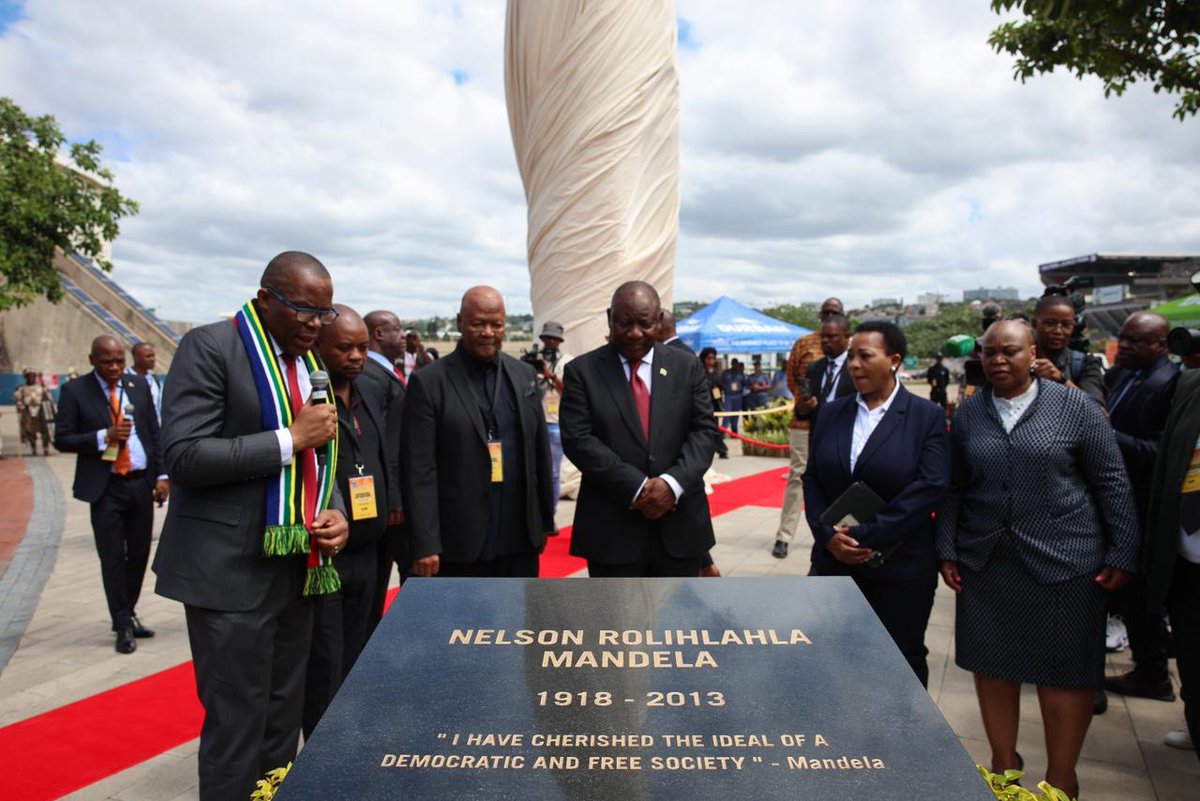
The unveiling of two R22 million bronze statues of Nelson Mandela and Oliver Tambo in Durban has sparked a wave of public debate. While city officials emphasize heritage and tourism benefits, critics argue that pressing needs like housing, infrastructure, and unemployment remain underfunded.
Durban’s eThekwini Municipality recently unveiled two bronze statues of Nelson Mandela and Oliver Tambo, costing a combined R22 million. The monuments, standing at 10 metres tall each, were funded from the city’s tourism budget and unveiled by President Cyril Ramaphosa. Municipal officials say the statues honor liberation icons and promote heritage tourism.
However, public reactions have been mixed. Many residents question whether such funds could have been allocated to urgent service delivery needs. Millions of South Africans still live in informal settlements, highlighting long-standing challenges in housing, water, and infrastructure.
Balancing Symbolism and Service Delivery
Critics argue that spending R22 million on statues contrasts sharply with ongoing service delivery backlogs. At an approximate cost of R150,000 per RDP house, the amount spent could have funded around 146 homes, providing shelter for families in need. Others note that additional investments could have addressed issues such as road maintenance, sewage management, and employment creation.
Municipal authorities, however, defend the decision. They point out that cultural monuments serve multiple purposes, from preserving historical memory to attracting tourism revenue, which can indirectly fund municipal services over time.
Voices from Social Media
These comments highlight the ongoing tension between symbolic gestures and tangible public benefits. Social media platforms such as X (formerly Twitter) have amplified these discussions, turning local municipal decisions into national debates.
Looking Ahead
The debate around Durban’s statues underscores broader questions about municipal spending priorities in South Africa. How cities balance heritage and cultural projects with immediate social needs remains a central issue for local governance, budget transparency, and civic engagement.