News Afrika
News Afrika
HomePoliticsEconomyMediaBusinessTechnologyHealth

Privacy PolicyTerms of ServiceAbout UsContact UsEditorial PolicyCorrections PolicyOwnership & FundingOur TeamCookie PolicySitemap

© 2026 News Afrika • Independent African Journalism • All Rights Reserved

    HomePoliticsLungu Burial Dispute Deepens as Body Remains in South Africa
    Politics

    Lungu Burial Dispute Deepens as Body Remains in South Africa

    Family of Zambia’s former president rejects poisoning claims and resists state involvement in funeral plans.

    By:Elize Smit
    February 19, 2026
    3 min read
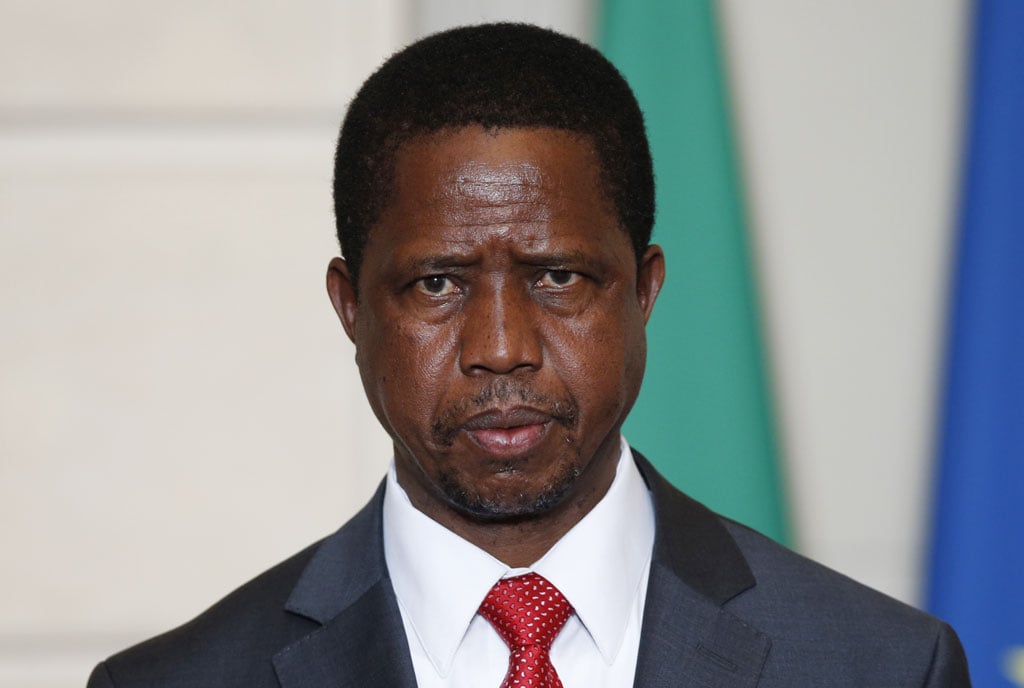
    Formal portrait of the late former Zambian President Edgar Lungu.
    Former Zambian President Edgar Lungu. As of February 2026, his body remains in Pretoria amid a legal dispute over burial arrangements. | Photo: File photo via X
    • •Edgar Lungu’s body remains in South Africa more than eight months after his death.
    • •His family has firmly rejected claims that he was poisoned.
    • •The Zambian government and relatives are locked in a legal and political standoff over burial arrangements.

    More than eight months after the death of former Zambian president Edgar Lungu, his body remains in a Pretoria morgue as a bitter dispute unfolds between his family and the Zambian government — a standoff that has evolved into a cross-border legal and political confrontation.

    What began as a period of national mourning has hardened into a deeply personal and political conflict. Since June 2025, when Edgar Lungu died, disagreements over the cause of his death and the nature of his burial have prevented closure — not only for his family, but for a country still divided over his legacy.

    Family Pushes Back on Poisoning Narrative

    Relatives have repeatedly dismissed allegations that the former president was poisoned, calling the claims speculative and damaging. They argue that such assertions politicize his passing and inflame tensions at a moment that should be defined by dignity and respect.

    The rejection of the poisoning narrative has become central to the standoff. Family representatives insist that decisions surrounding the funeral should rest primarily with them, rather than being directed by state authorities.

    State Interests and Political Legacy

    For the Zambian government, the matter carries constitutional and symbolic weight. As a former head of state, Lungu occupies a significant place in the nation’s political history. Officials maintain that burial arrangements for former presidents are not merely private affairs but events of national importance.

    The disagreement has therefore evolved beyond funeral logistics. It now reflects broader tensions about authority, protocol, and how Zambia chooses to remember one of its most consequential political figures.

    A Cross-Border Legal Deadlock

    Complicating matters further is the fact that Lungu’s body remains in South Africa, where he died. The cross-border element has introduced additional legal layers, as any repatriation or final arrangements must align with both South African and Zambian regulations.

    Legal proceedings and negotiations have stretched on for months, with no definitive resolution in sight. The prolonged impasse has drawn regional attention, underscoring how personal grief can intersect with state protocol and international law.

    Why This Dispute Matters

    At its core, the conflict raises fundamental questions about the balance between family rights and state responsibility. Who ultimately controls the legacy of a former president — the relatives who mourn him privately, or the nation he once led?

    Until a resolution is reached, the continued presence of Lungu’s body in Pretoria stands as a stark symbol of unfinished business. For many Zambians, closure will only come when the legal wrangling ends and a final resting place is agreed upon — one that reconciles personal wishes with national memory.

    Tags

    Edgar Lungu
    Zambia politics
    State funeral
    Southern Africa
    Legal dispute

    Related Stories

    Historic Union Buildings complex in Pretoria, featuring symmetrical architecture with towers, domes, and gardens under bright daylight.
    DIPLOMACY
    •2 MIN READ

    South Africa Pushes Back Against U.S. on Iran Policy

    On March 16, 2026, South Africa formally rejected U.S. attempts to pressure it into distancing itself from Iran, highlighting Pretoria's commitment to sovereign foreign policy decisions despite rising global scrutiny.

    March 16, 2026
    Government building in Madagascar symbolizing political leadership and governance
    AFRICAN POLITICS
    •2 MIN READ

    Power Shifts in Africa: Madagascar Cabinet Dissolved, Guinea Bans 40 Parties

    Two major political developments in Africa have raised fresh questions about governance and democratic stability. Madagascar’s cabinet has been abruptly dissolved amid a military-linked shake-up, while authorities in Guinea have moved to dissolve around 40 political parties in a sweeping crackdown on opposition groups.

    March 16, 2026
    Legislative and presidential elections in the Democratic Republic of Congo during 2011.
    ELECTIONS
    •3 MIN READ

    Republic of Congo Presidential Vote Nears as Turnout and Reform Demands Take Center Stage

    The Republic of Congo is approaching a pivotal presidential election scheduled for March 15, with long-time leader Denis Sassou Nguesso seeking another term in office. While many analysts expect continuity, opposition figures and civil society groups say the vote represents a critical moment for democratic reform and economic accountability in the oil-rich Central African nation.

    March 15, 2026
    Madlanga Commission of Inquiry.
    GOVERNANCE
    •2 MIN READ

    Madlanga Commission Day 77: Suspended Crime Intelligence Figure Richard Shibiri Faces Tough Questions

    The Madlanga Commission of Inquiry entered its 77th day of hearings with renewed scrutiny on suspended Crime Intelligence figure Richard Shibiri, as investigators examined allegations of political interference, corruption, and possible connections between law-enforcement officials and organised crime networks.

    March 13, 2026