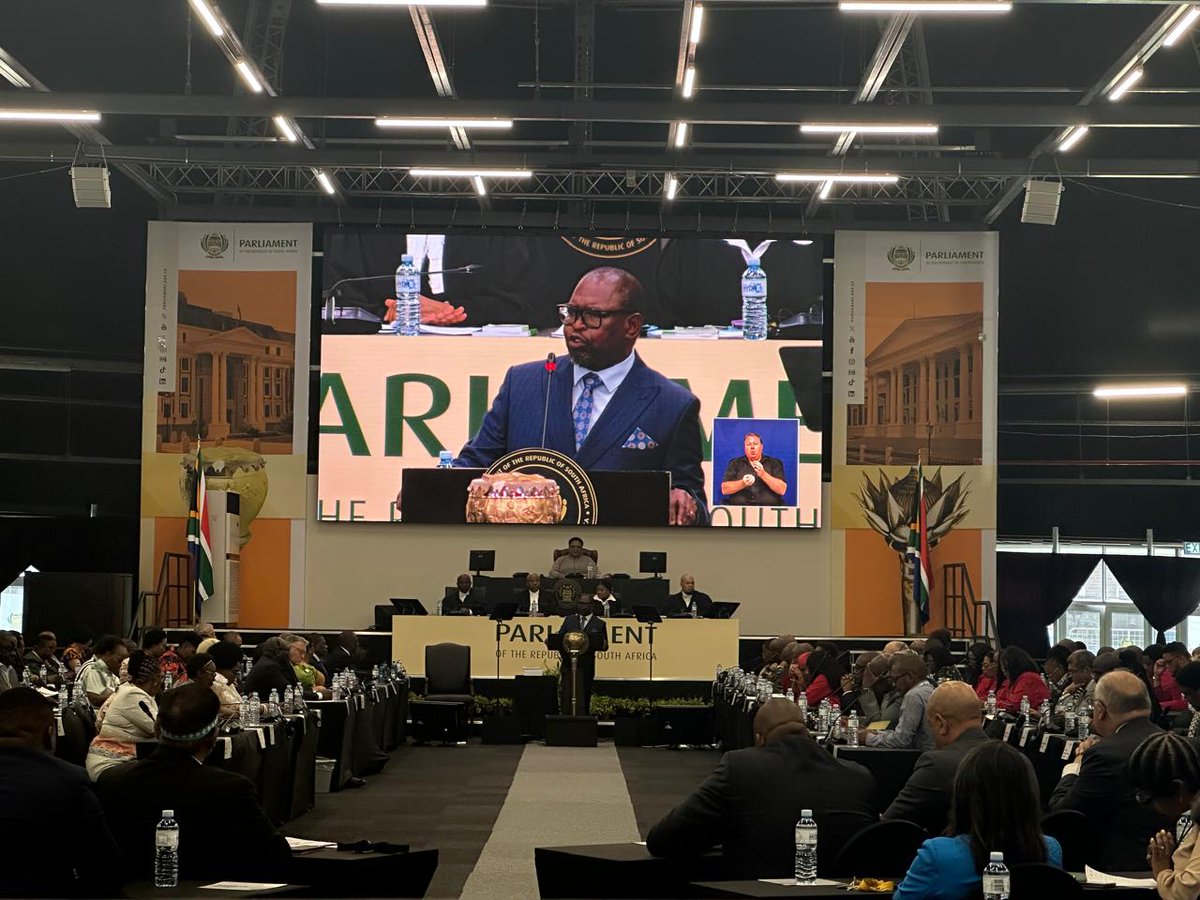
South Africa’s 2026 national budget has ignited one of the most intense political confrontations since the formation of the Government of National Unity (GNU). Finance Minister Enoch Godongwana’s proposal to raise approximately R200 billion through a mix of tax adjustments and fiscal restructuring has triggered fierce opposition from coalition partners, most notably the Democratic Alliance (DA). The disagreement reached a dramatic moment in Parliament when DA members staged a walkout during the budget speech, arguing that the tax strategy would place additional pressure on businesses and middle-income households already struggling under economic strain. Beyond the political spectacle, the budget debate has sent shockwaves through financial markets, with investors reacting nervously to the prospect of fiscal instability. The Johannesburg Stock Exchange experienced immediate volatility while the South African rand weakened against major currencies. Economists warn that the dispute could have far-reaching implications for economic growth, government credibility, and the future of the coalition itself. As political negotiations intensify behind closed doors, the 2026 budget may ultimately determine whether the fragile GNU experiment can survive the pressures of governing a divided economy.
South Africa’s annual budget speech is typically a moment of intense political debate, but the 2026 fiscal announcement has evolved into something far more consequential. With government debt levels rising and public spending demands growing across healthcare, infrastructure, and social services, Finance Minister Enoch Godongwana introduced a controversial fiscal adjustment expected to raise approximately R200 billion through new taxes and policy changes.
While government officials argue that the measures are necessary to stabilize public finances, critics within the coalition government say the approach risks slowing economic recovery. The disagreement escalated dramatically inside Parliament when Democratic Alliance lawmakers staged a walkout during the speech, signaling deep fractures within the governing alliance.
The incident has transformed what might have been a routine fiscal debate into a defining moment for the Government of National Unity, raising concerns about whether the fragile coalition can maintain unity while navigating economic pressures.
Breaking Down the Proposed Tax Adjustments
At the center of the controversy is a package of tax measures designed to generate additional revenue for the national treasury. Government officials argue that without new funding sources, the state will struggle to meet obligations ranging from public sector wages to infrastructure investments.
The proposed tax pivot includes adjustments to personal income tax brackets, potential increases in fuel levies, and expanded compliance measures aimed at closing tax collection gaps. Corporate taxation policies are also under review, particularly for industries benefiting from strong commodity cycles.
Opposition parties argue that these changes will disproportionately affect middle-income households and small businesses already coping with inflation and slow economic growth. The DA’s parliamentary walkout was framed as a protest against what the party described as an excessive reliance on tax increases rather than structural economic reform.
Supporters of the budget counter that the fiscal reality facing South Africa leaves few alternatives. Government debt servicing costs have grown significantly over the past decade, making revenue generation a central priority for policymakers.
Inside the Final 48 Hours Before the Budget
Behind the scenes, the final days before the budget speech were marked by intense negotiations among coalition leaders. Senior officials reportedly held a series of emergency meetings in an effort to reconcile competing economic strategies between coalition partners.
According to political insiders, the dispute centered on the scale of the proposed tax measures and the balance between raising revenue and encouraging economic growth. Some coalition members pushed for deeper spending reforms instead of additional taxation.
Despite these discussions, consensus ultimately proved elusive. By the time the finance minister delivered the speech in Parliament, tensions had reached a breaking point, culminating in the dramatic walkout that captured national attention.
The episode underscores the complex reality of coalition governance, where policy decisions must accommodate multiple political priorities.
Market Reaction: JSE Volatility and a Weaker Rand
Financial markets reacted quickly to the political uncertainty surrounding the budget announcement. Investors often view political instability as a risk factor, particularly when it affects economic policy.
In the hours following the speech, the Johannesburg Stock Exchange experienced noticeable fluctuations as traders assessed the potential impact of higher taxes and coalition tensions. Several sectors, particularly retail and banking, recorded declines during early trading sessions.
The South African rand also weakened against major global currencies as investors sought safer assets amid uncertainty. Currency analysts noted that political divisions within the government could influence investor confidence in the country’s fiscal management.
While markets often recover after initial reactions to political events, prolonged instability could increase borrowing costs for the government and complicate efforts to attract foreign investment.
What Economists Are Saying
Leading South African economists have offered mixed assessments of the budget proposals. Some argue that the government had little choice but to increase revenue in order to manage rising debt obligations and maintain essential public services.
Others warn that excessive taxation could slow economic growth if businesses reduce investment or consumers cut spending. In a fragile economic environment, even small shifts in confidence can have noticeable effects on employment and productivity.
Several analysts have emphasized that the most important factor may not be the tax increases themselves but the political stability surrounding their implementation. Markets generally prefer predictable policy environments, and prolonged disputes within the coalition could create uncertainty.
Three Possible Scenarios for the GNU
As negotiations continue, analysts see several possible paths forward for the Government of National Unity. The first scenario involves compromise, where coalition partners agree on modifications to the tax plan while maintaining overall fiscal objectives.
A second possibility is prolonged policy gridlock. If coalition disagreements persist, legislative delays could slow the implementation of key budget measures, complicating fiscal planning for the year ahead.
The most dramatic scenario would involve a breakdown of the coalition itself. While many political observers believe such an outcome remains unlikely, the events surrounding the budget debate demonstrate how quickly tensions can escalate.
For now, South Africa’s political and economic future may depend on whether coalition leaders can find common ground in the weeks following the controversial budget announcement.