News Afrika
News Afrika
HomePoliticsEconomyMediaBusinessTechnologyHealth

Privacy PolicyTerms of ServiceAbout UsContact UsEditorial PolicyCorrections PolicyOwnership & FundingOur TeamCookie PolicySitemap

© 2026 News Afrika • Independent African Journalism • All Rights Reserved

    HomeWorldOil at the Brink: How Middle East Tensions Threaten to Trigger a Worldwide Energy Shock
    World

    Oil at the Brink: How Middle East Tensions Threaten to Trigger a Worldwide Energy Shock

    Escalating regional conflict risks disrupting critical supply routes, sending crude prices higher and rattling economies far beyond the battlefield.

    By:Nathaniel A. Bapela
    March 2, 2026
    2 min read
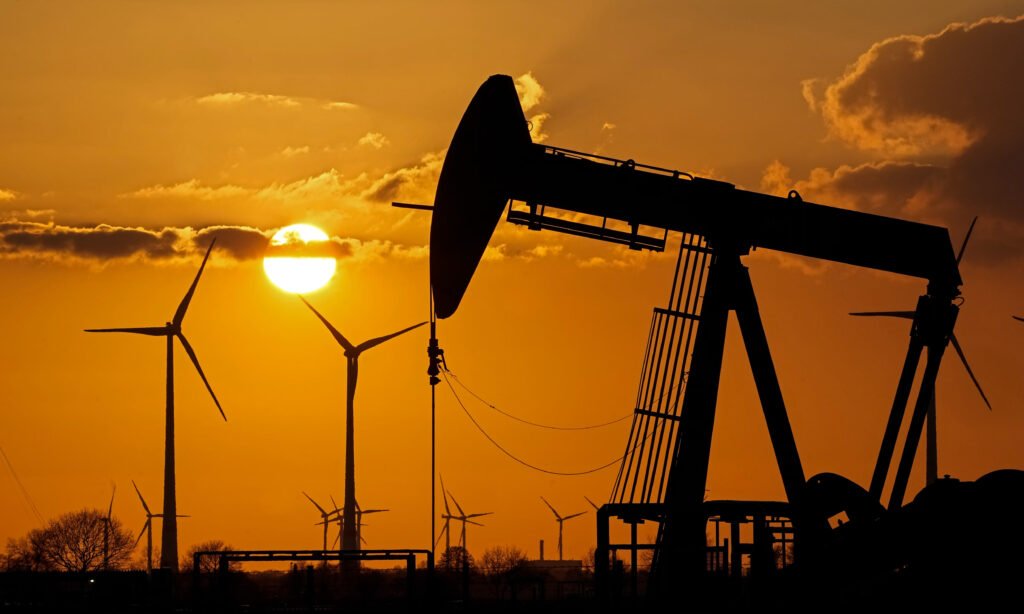
    Silhouette of oil pumpjack and wind turbines against orange sunset sky with sun visible.
    Oil prices spike after Middle East attacks disrupt global energy supply. | Photo: Daily Excelsior featured image (stock photo, no photographer named)
    • •Oil prices surge as geopolitical tensions intensify.
    • •Key shipping routes face disruption risks.
    • •Higher fuel costs threaten global inflation rebound.
    • •Energy-importing nations brace for economic strain.

    Oil markets are once again on edge as rising Middle East tensions threaten key production hubs and shipping corridors. With traders pricing in supply disruption risks, even limited attacks could trigger a global energy shock that reverberates from fuel pumps to food prices.

    Global oil markets are flashing warning signals as renewed tensions in the Middle East threaten some of the world’s most critical energy corridors. Traders have responded swiftly, pushing crude benchmarks higher amid fears that even limited attacks on infrastructure or shipping lanes could squeeze supply.

    A Region That Powers the World

    The Middle East accounts for roughly a third of global oil production and an even greater share of proven reserves. Key transit chokepoints, including the Strait of Hormuz, handle a significant portion of the world’s seaborne crude exports. Any disruption—whether through direct strikes, blockades, or insurance pullbacks—can rapidly tighten global supply.

    Markets do not wait for full-scale shutdowns. The mere risk premium attached to potential conflict is often enough to send prices climbing, as refiners and governments scramble to secure inventories.

    From Oil Shock to Inflation Shock

    Higher crude prices quickly filter through to consumers. Fuel becomes more expensive, transportation costs rise, and food supply chains feel renewed pressure. For countries already battling fragile growth and stubborn inflation, another energy spike could complicate monetary policy and strain household budgets.

    Emerging economies that rely heavily on imported fuel are particularly vulnerable. Currency depreciation combined with rising import bills can widen deficits and increase borrowing costs.

    Markets, Strategy and What Happens Next

    Energy analysts warn that sustained instability could force strategic petroleum reserve releases or accelerate diversification toward renewables and alternative suppliers. However, such transitions take time. In the short term, volatility may remain elevated as investors track diplomatic signals, military movements, and shipping data.

    The broader question is not only how high prices may rise, but how long they could stay elevated. A brief flare-up might cause a temporary spike. A prolonged confrontation could reshape global trade flows, reprice risk across financial markets, and deepen geopolitical divisions.

    For now, the oil market sits on a knife’s edge—highly sensitive to headlines, yet deeply aware that energy remains the bloodstream of the global economy.

    Sources

    • International Energy Agency – Oil Market Data

    Tags

    Oil Prices
    Middle East
    Energy Crisis
    Global Markets
    Supply Shock

    Related Stories

    President Donald J. Trump Departs the South Lawn | by whitehouse45
    INTERNATIONAL RELATIONS
    •5 MIN READ

    How Donald Trump’s Foreign Policy Could Reshape US–Africa Relations in 2026

    The direction of United States foreign policy has long carried major implications for Africa’s economic partnerships, security cooperation, and diplomatic alignment. In 2026, renewed attention on Washington’s international priorities has sparked debate among analysts about how the foreign policy approach associated with Donald Trump could influence relations between the United States and African nations.

    March 9, 2026
    Bulk carrier vessels navigating open waters, symbolizing global maritime trade routes under pressure.
    GLOBAL ECONOMY
    •3 MIN READ

    Global Shipping Disruptions Return: Why 2026 Could Test Supply Chains More Severely Than 2022

    Early indicators suggest that global supply chains are once again entering a stress phase. Freight benchmarks are edging upward, insurers are repricing maritime risk, and vessels are rerouting around sensitive corridors. While the system is not yet in crisis, the structural buffers built after 2022 are now being tested under a new combination of geopolitical and climate pressures.

    March 3, 2026
    Several South African Airways aircraft parked on the sunny airport tarmac with clear blue skies and a terminal building visible.
    AVIATION
    •2 MIN READ

    Johannesburg to Dubai: Travel Uncertainty Grows Amid Escalation

    Flights between Johannesburg and Dubai have long symbolised opportunity — linking Southern Africa to global markets, tourism hubs and investment corridors. But as regional tensions intensify, uncertainty is beginning to ripple through air travel, raising fresh questions about route stability, insurance costs and passenger confidence.

    March 2, 2026
    Ayatollah Ali Khamenei smiling and waving with right hand raised to a crowd in a meeting hall, blurred audience hands in foreground, framed portrait of a bearded man on blue curtained wall behind.
    MIDDLE EAST
    •2 MIN READ

    Ayatollah Ali Khamenei Passes Away: Iran and the World React

    Ayatollah Ali Khamenei, Iran’s Supreme Leader and a defining figure in Middle Eastern politics for decades, has died, leaving a nation in mourning and prompting international attention on the future of Iranian governance and regional security.

    March 1, 2026