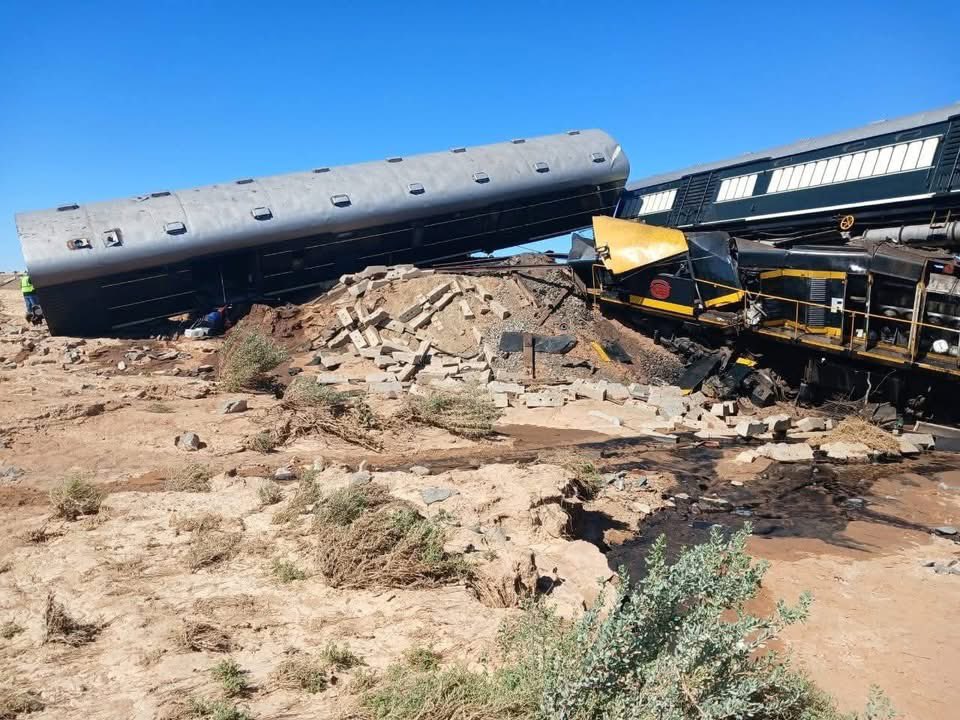
A tragic derailment of the Rovos Rail luxury train near Keetmanshoop, Namibia, has left two passengers dead and several others injured. The incident casts a spotlight on the challenges of maintaining high-speed rail safety in remote desert regions.
The derailment occurred late Tuesday, leaving two passengers dead and multiple others injured, according to Namibian authorities. Rovos Rail, known for its luxurious vintage carriages, operates across Southern Africa, offering travelers an unparalleled experience through scenic desert landscapes. Witnesses report the train left the tracks after navigating a remote stretch outside Keetmanshoop, causing several carriages to overturn amid desert terrain.
Rail safety experts note that while luxury trains prioritize comfort and aesthetics, maintaining track integrity in sparsely populated desert regions poses unique challenges. 'Remote stretches often lack immediate maintenance oversight,' says Dr. Johan van der Merwe, a rail safety consultant based in Windhoek. 'Even minor track misalignments can be catastrophic at speed.'
Emergency response teams were quickly deployed, navigating difficult terrain to reach passengers. The incident underscores the importance of comprehensive disaster preparedness, even for premium rail operators, and raises questions about risk assessment on routes that traverse isolated environments.
Authorities have launched a full investigation to determine the cause, with initial reports suggesting a potential combination of track failure and mechanical issues. Investigators are reviewing maintenance logs, train speed records, and staff protocols. For Namibian tourism and the luxury rail sector, the derailment presents both a reputational and operational challenge, emphasizing that safety must match the high standards promised to passengers.
Travelers and industry observers are watching closely, as insights from this incident could influence safety regulations across Southern Africa’s premium rail services. The Rovos Rail derailment serves as a stark reminder that even celebrated experiences are vulnerable to infrastructure and logistical vulnerabilities in extreme environments.